
Back to: Introduction to Circular Economy
In this lesson, you will be introduced to the foundational concepts of the Circular Economy and gain a clear understanding of how it differs from traditional linear systems.
Watch the following video to explore what the circular economy looks like. It highlights the key differences between linear and circular economy systems while introducing the core concepts of the circular economy.
As shown in the video, you’ve now seen the key differences between linear and circular economy models, and gained an understanding of what the Circular Economy fundamentally involves.
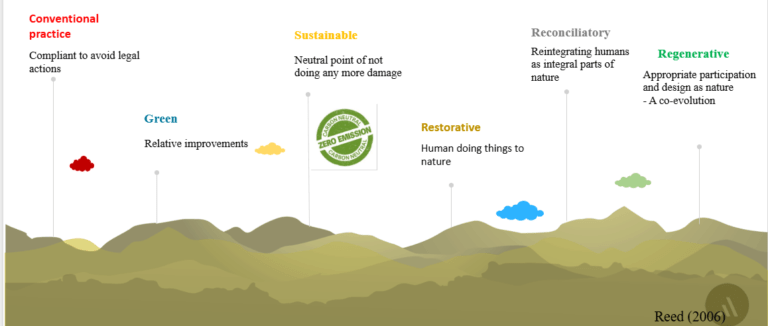
Setting goals to be regenerative rather than sustainable
Let’s start by understanding the linear economy. What is it, and how does it work? Well, the linear economy follows a straightforward process, extract, produce, consume, and discard. It’s a one-way flow of resources, and once we’re done with a product, it becomes a waste.
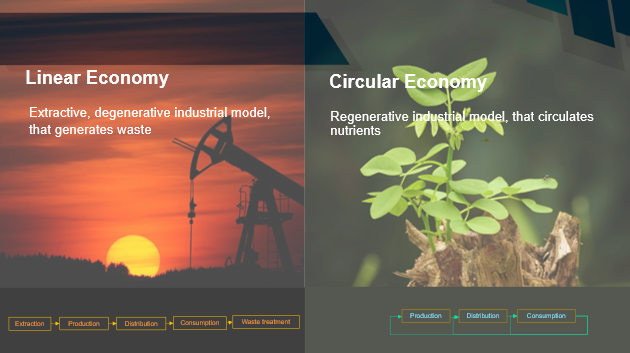
The linear economy model vs. circular economy model
| Linear economy | Circular economy |
| Extractive, degenerative industrial model, that generates waste | Regenerative industrial model, that circulates nutrients |
| Production Distribution Consumption Extraction Waste treatment |
Production Distribution Consumption |
Now, let’s think about the challenges this creates. Every time we produce something, we extract raw materials from the earth. This leads to resource depletion, disrupting the natural balance of ecosystems.
And what happens at the end of the product’s life? Most of it ends up in landfills. This waste doesn’t just disappear. It piles up, contaminating our soil, water, and air.
The linear model prioritizes mass production and economies of scale, which might seem efficient at first glance. But it’s an extractive and degenerative system. It focuses on short-term gains without considering the long-term consequences for the planet.
So, what’s the alternative? This is where the circular economy comes in. Unlike the linear model, the circular economy is an alternative economic model that focuses on regeneration of products, components and materials to the highest utility and value.
In the circular model, waste isn’t waste. It’s a resource. By designing products to be durable, repairable, and recyclable. It’s a shift from a throwaway culture to one that values sustainability and balance.
Now, let’s dive deeper into what makes the circular economy so different and why it’s a game-changer for our future.
The core concept of the circular economy.
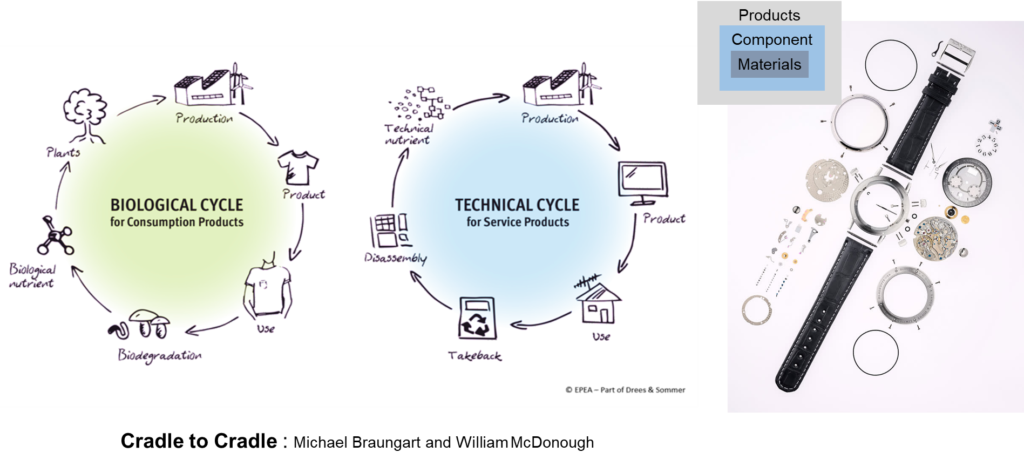
Let’s take a step back and ask, where did the ideas behind the circular economy originate? Much of the foundation comes from the Cradle-to-Cradle principle, introduced in the 1970s by Michael Braungart and William McDonough. Their revolutionary concept shifted the focus from “doing less harm” to “creating positive impacts.” Instead of minimizing damage, their approach focuses on designing systems that continuously benefit the environment and society.
One of the key messages from Cradle to Cradle – Remaking the way we make things, is that “less bad” isn’t enough. Instead, we need to design materials, components, and products intentionally so they can follow two primary cycles that are biological and technical.
To explore these principles further, refer to Cradle to Cradle – Remaking the way we make things or visit Michael McDonough’s site for deeper insights.
Biological cycles
These are products that work well with nature. They break down naturally and safely, like compost that adds nutrients back to the soil.
E.g., A biodegradable food container can decompose after use and help the environment instead of causing pollution .
Key characteristics
- Safe decomposition – Products break down into natural elements like carbon dioxide, water, and biomass, enriching ecosystems.
- Renewable resources – Often made from organic, sustainable materials like plants or animal-derived substances.
- Composability – Can contribute to the soil, increasing fertility or supporting plant growth.
Why biological cycles matter
- Reduce pollution caused by non-degradable waste, such as plastics that clog waterways or landfills.
- Promote soil health and biodiversity by returning nutrients to the earth.
- Reduce the need for synthetic fertilizers, conserving energy and resources.
Technical cycles
These are products designed to be used again and again. They can be repaired, recycled, or upgraded instead of being thrown away.
E.g., A smartphone with parts that can be replaced or fixed helps save resources and reduces waste.
Key characteristics
- Durability – Products are made to last longer and withstand wear and tear.
- Ease of repair and maintenance – Components are replaceable, and upgrades are possible.
- Recyclability – Materials can be processed to create new items without losing their value.
- Resource efficiency – Reduces reliance on newly extracted raw materials by reusing existing ones.
Why technical cycles matter
- Extend the lifespan of products, reducing the need for frequent replacements.
- Preserve natural resources by reducing the demand for raw material extraction (E.g., mining).
- Decrease energy consumption and emissions associated with manufacturing new products.
- Support sustainable economic models, such as leasing or subscription services, where ownership is shared, and products are maintained centrally.
For more information, please refer to the link below.
|
A video is to be included, referring to https://youtu.be/Lc-FQvPO89Y |
Let’s watch this video to find out how Biological and technical cycles look like.
Let’s start by understanding the linear economy. What is it, and how does it work? Well, the linear economy follows a straightforward process, extract, produce, consume, and discard. It’s a one-way flow of resources, and once we’re done with a product, it becomes a waste.
Now, let’s think about the challenges this creates. Every time we produce something, we extract raw materials from the earth. This leads to resource depletion, disrupting the natural balance of ecosystems.
And what happens at the end of the product’s life? Most of it ends up in landfills. This waste doesn’t just disappear. It piles up, contaminating our soil, water, and air.
The linear model prioritizes mass production and economies of scale, which might seem efficient at first glance. But it’s an extractive and degenerative system. It focuses on short-term gains without considering the long-term consequences for the planet.
So, what’s the alternative? This is where the circular economy comes in. Unlike the linear model, the circular economy is an alternative economic model that focuses on regeneration of products, components and materials to the highest utility and value.
In the circular model, waste isn’t waste. It’s a resource. By designing products to be durable, repairable, and recyclable. It’s a shift from a throwaway culture to one that values sustainability and balance.
Let’s clarify what circular economy is, it involves proactively designing systems to be regenerative, carefully distributing and retrieving goods, and ensuring that the reverse pathway is accessible and activated. It focuses on recovering nutrients after use, with an emphasis on maintaining their quality. In a circular economy, everything, even what is traditionally seen as waste, is treated as valuable resources or by-products that can be reused.
It’s important to clarify what it is not. The circular economy does not merely aim for a closed-loop circulation of resources, where a product is expected to return solely to recreate the same type of product. The circular economy involves a more comprehensive approach to resource management, emphasizing regeneration within economic processes.
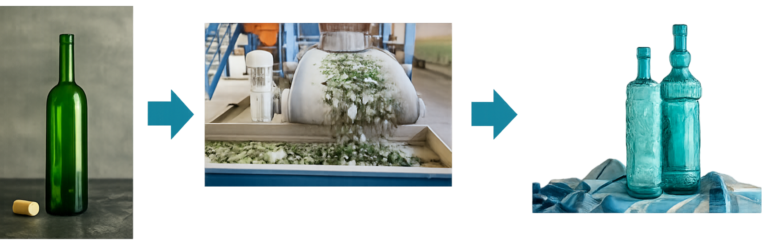
Consider a plastic bottle that you’re currently using. The conventional approach would be to recycle it back into another plastic bottle. However, this recycling process often involves significant energy consumption, resource utilization, and sometimes high costs for recovery. Achieving a closed loop by investing additional resources and potentially increasing greenhouse gas emissions for repurposing is not the primary goal of a circular economy. Moreover, circular economy isn’t solely about recycling or repurposing materials, nor is it about letting waste generate and then repurposing it. While these actions may be transitional steps from a linear to a circular economy, they do not reflect the core concept of sustainability.
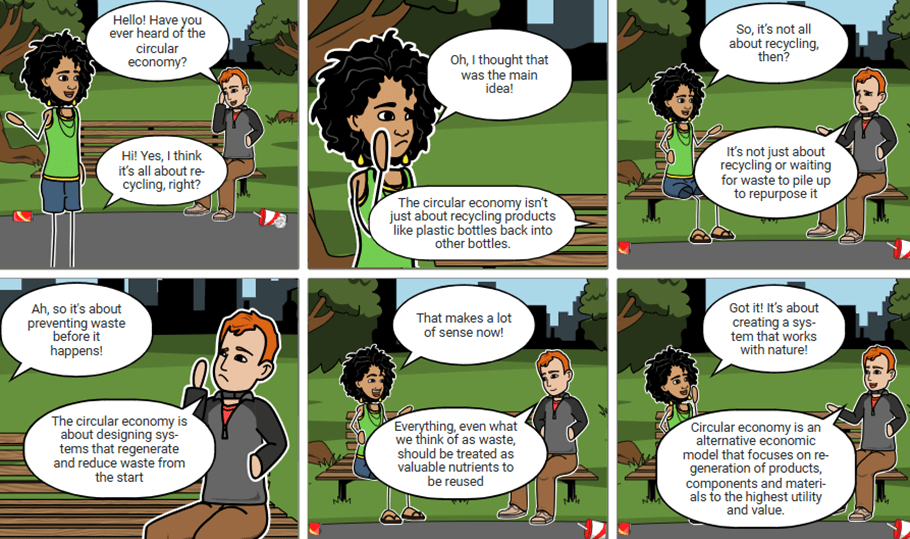
Now, you are able to visualise the broader scope of a circular economy beyond just recycling. It emphasizes,
- the importance of proactive design to prevent waste from the start.
- viewing waste as a resource to be reused and regenerated.
- transitioning to a system that mix design of nature to balance nutrient flows in a dynamic equilibriem.