3.1 Eight Strategies for Implementing Circular Economy Principles

0

In this lesson, you will explore the main strategies of the circular economy and the core concepts behind each one. As shown below, our current linear economy follows a ‘take-make-dispose’ approach. However, to transition to a circular economy, we must adopt a broader set of strategies that keep resources in use for as long as possible. This lesson will guide you through those essential strategies.

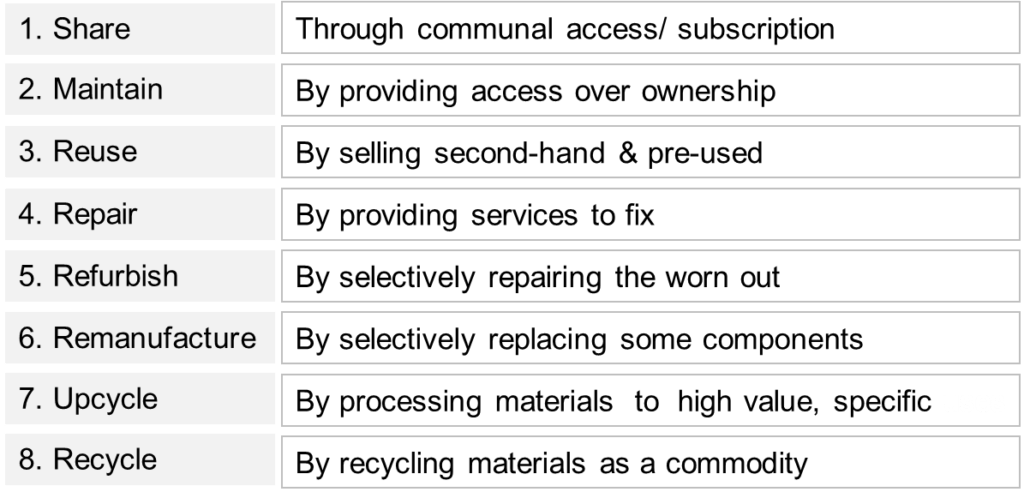
To better understand circular economy principles, it’s essential to explore the strategies that make it effective in various industrial and consumer scenarios. These strategies are not just about recycling or reducing waste. They focus on rethinking how we design, use, and dispose of products. By applying these strategies, industries can create systems where resources are reused and waste is minimized, resulting in a sustainable approach to production and consumption.

Now, let’s dive into the eight strategies for implementing CE principles. Each strategy plays a crucial role in shifting our traditional linear model of ‘take, make, dispose’ to a regenerative and sustainable circular model.

Let’s watch this video to understand more about the strategies of circular economy

Sharing

image

Maximize the utilization of products by enabling multiple consumers to share access.

Reduce the overall demand for new products, minimizing resource consumption.

Optimize product usage by prioritizing access over individual ownership.

By offering access instead of ownership, the strategy encourages more efficient and sustainable resource use.

Maintaining

Producer retains ownership of the product while the consumer only gains access.

Producers are responsible for maintaining, repairing, and upgrading the product.

Ensure products remain in use for a longer time.

Producers are incentivized to keep products functional and durable.

It helps reduce waste and extends the lifecycle of products.

In a linear economy, ownership and responsibility shift to the consumer: Buy it. Break it. Replace it.
In a circular economy, producers remain custodians of the product—responsible for its maintenance, upgrades, and longevity.

A great example?

Lighting-as-a-service.
You don’t buy the light bulbs – you pay for the light.
This means companies are incentivized to install the most durable, energy-efficient systems, reducing waste and maximizing efficiency.

Product-Service Systems

Visuals –  Icons showing cars, appliances, lighting under service contracts

So why are product-service systems better than traditional ownership?

  • Higher resource efficiency – One car can serve 20 people.
  • Durable products – Companies profit from longevity, not planned obsolescence.
  • Built-in circularity – Take-back, refurbish, and reuse systems are baked in.
  • Lower barriers – No upfront purchase or maintenance stress for consumers.
  • Outcome-focused – It’s not the product that matters, it’s the service it provides.

We will dive into more bout PSS in one of our upcoming lessons.

Reuse

image

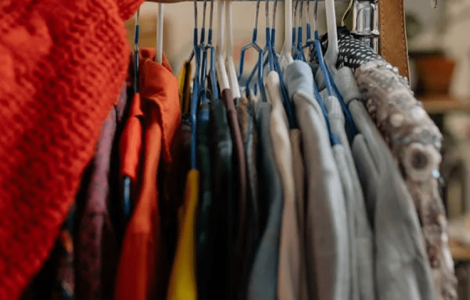
Focuses on reselling a product once the initial consumer no longer needs it.

This can involve returning the product to the original producer for repurposing or selling it to another consumer.

The primary goal is to extend the product’s lifecycle by giving it a second chance to use.

Reduce the demand for new resources and help minimize waste.

Repair

image

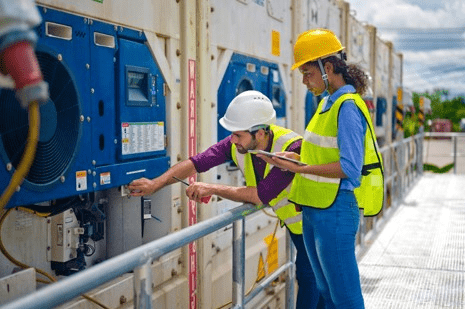
Focuses on fixing defective products instead of discarding them.

Ensure products remain operational and usable for longer periods.

By offering repair services, producers can help maintain their products effectively.

Reduces waste and delays the need for manufacturing new products.

Refurbish and Remanufacture

image

Focuses on restoring or rebuilding products to a like-new condition.

Refurbishing includes repairing or replacing specific parts.

Remanufacturing involves disassembling products to recover and reuse valuable components.

Both strategies rely on careful product design to enable easy disassembly and reuse.

These approaches reduce the demand for new materials and extend the lifespan of existing products.

Upcycle

image

Upcycling transforms products considered waste or of lower value into items of equal or greater value.

This strategy repurposes materials to reduce waste and create new products with higher utility or value.

Contributes to the circular economy by utilizing resources that would otherwise be discarded.

Upcycling promotes sustainability by extending the usefulness of existing materials.

Recycle

image

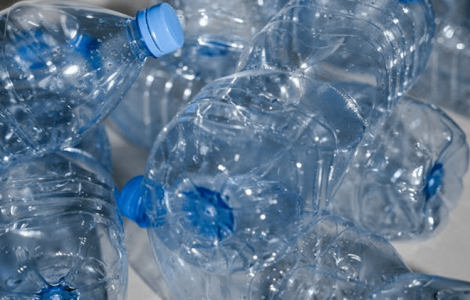
Break down products into raw materials for use in creating new products.

Reduce the need for new raw materials, conserving natural resources.

Recycling often involves energy and resource costs to process the original materials.

Compared to strategies like reuse or repair, recycling is less efficient but still essential.

It remains a crucial tool for reducing waste and supporting resource conservation.

What do you think? Are recycling and upcycling the same concept or two distinct concepts?
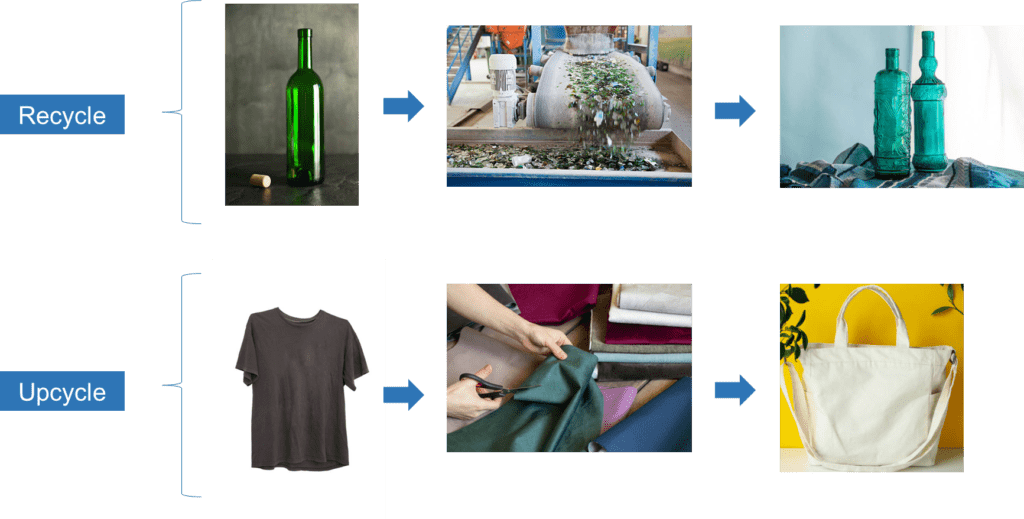
Do you know the difference between upcycling and recycling?

Recycling involves breaking down materials into raw components through processes like crushing, melting, and shredding, which often degrade material quality. For example, an old washing machine might be dismantled, with its metal and plastic parts processed into new products.

In contrast, upcycling preserves the original structure of an item, creatively repurposing it without intensive processing. Upcycling retains more value and requires less energy, making it a more resource-efficient option when feasible, while recycling remains crucial for materials that cannot be directly reused.

Now that you’ve learned the key strategies of the circular economy, the next lesson will focus on how to apply these concepts in real-world contexts