
Back to: Introduction to Circular Economy
Have you ever heard about Product Service Systems (PSS)?
In this lesson, you will explore what PSS are, their key characteristics, and other important factors that make them an essential strategy for circular business models.
PSS represents a fundamental shift from the traditional product-oriented linear model. These systems shift the focus from selling products as commodities to offering solutions that fulfil customers’ needs and provide added value. PSS focuses on selling services and performance instead of products, creating a business model that naturally aligns with circular economy principles.
PSS plays a crucial role in the circular economy.
The video below will give you a brief overview of PSS.
Video.
Five business models, which create five types of purchasing models
Key differences
Ownership
Access
How resources are managed.
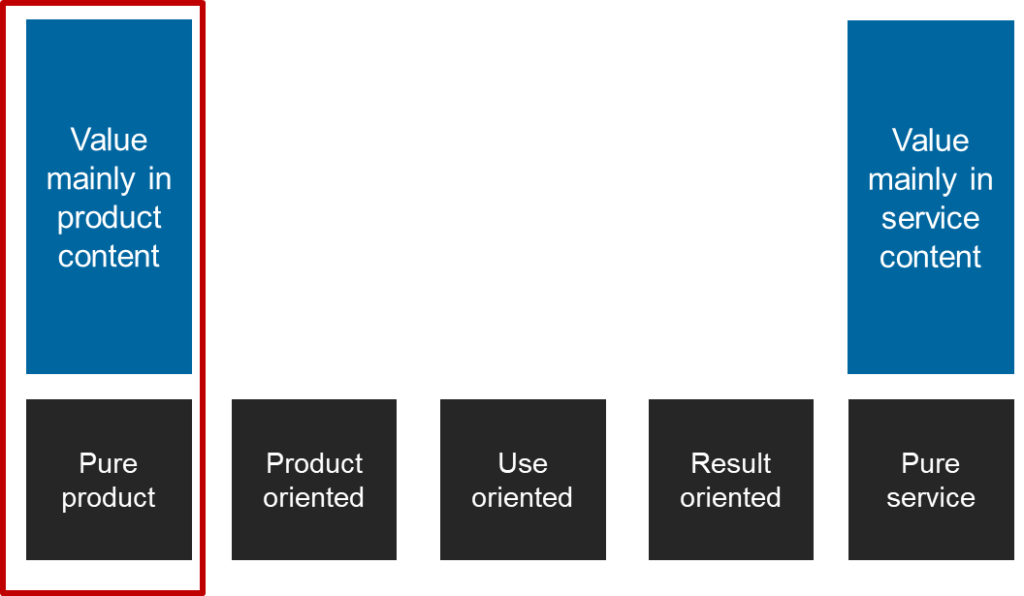
Service
Let’s look at an example of a service.
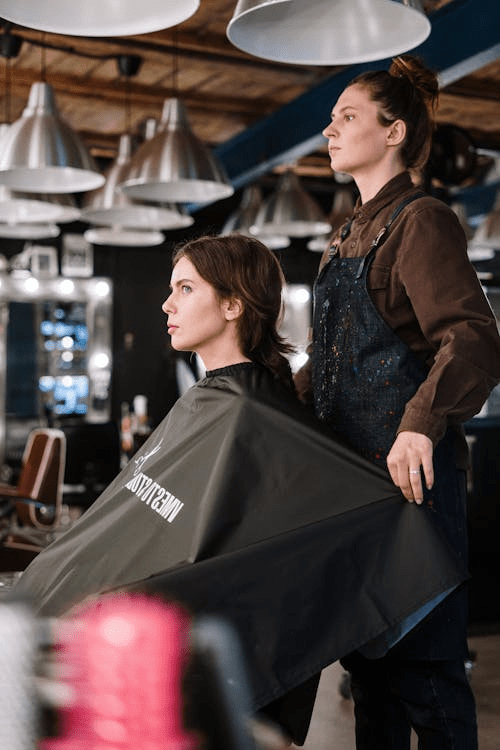
You go to a salon for a hair cut
•Hairdresser owns/pays for the hair care products
•Hairdresser owns/pays for the cutting equipment
•Hairdresser owns/pays for the salon infrastructure
•You pay for service
•The costs of all the above is charged to you via service
- Result-oriented PSS – Pay for performance
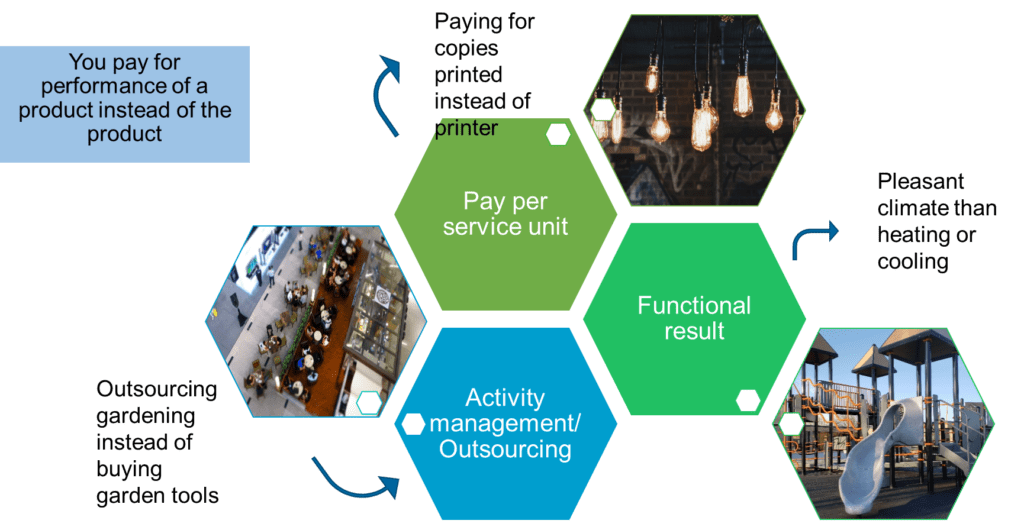
(This will develop.
Explanation)
Switching to a performance-based model
Consider purchasing a chemical leasing.
Before
•Chemical seller – To sell more chemicals
•Chemical buyer – To have better performance, To purchase less chemicals
Functional unit of sale
Litres of chemicals sold > Area / Parts lubricated
Now
Both the chemical seller and buyer – Enhanced performance from a litre of chemicals
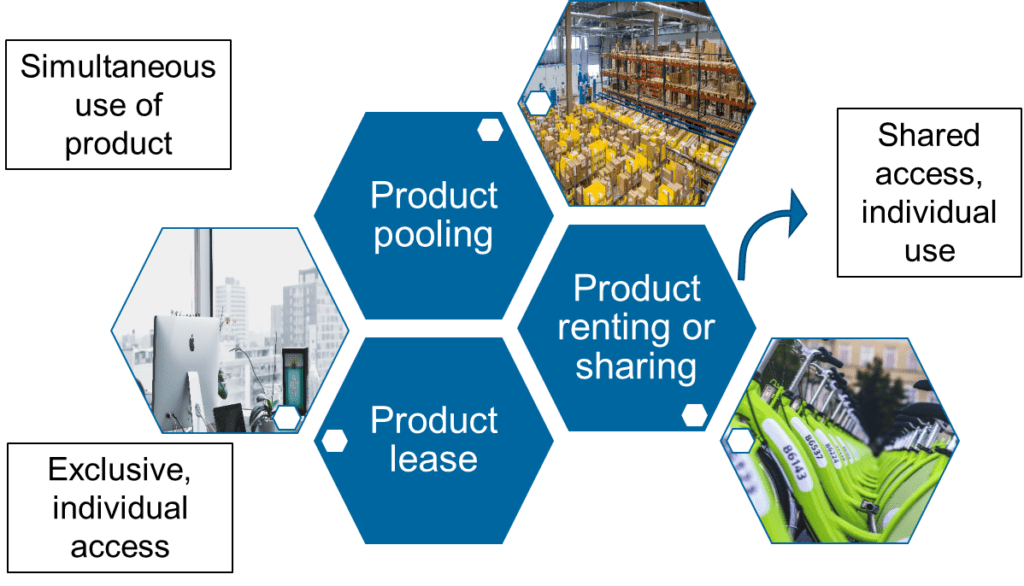
2. Use-oriented PSS – Pay for utility
•The traditional product still plays a central role, but the business model is not geared towards selling products
•The product stays in ownership with the provider, and is made available in a different form, and sometimes shared by a number of users
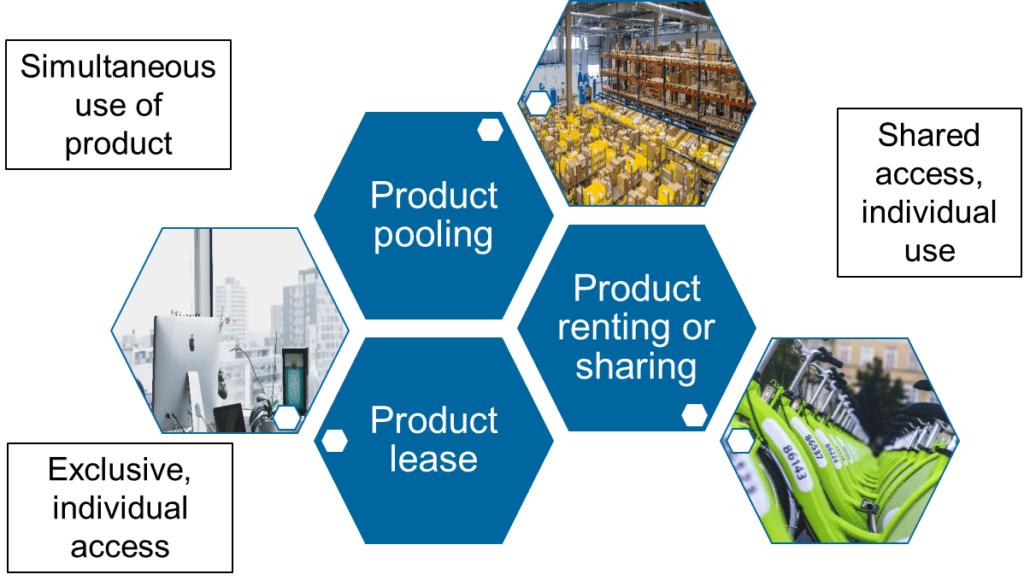
This image will change and will add the explanation………
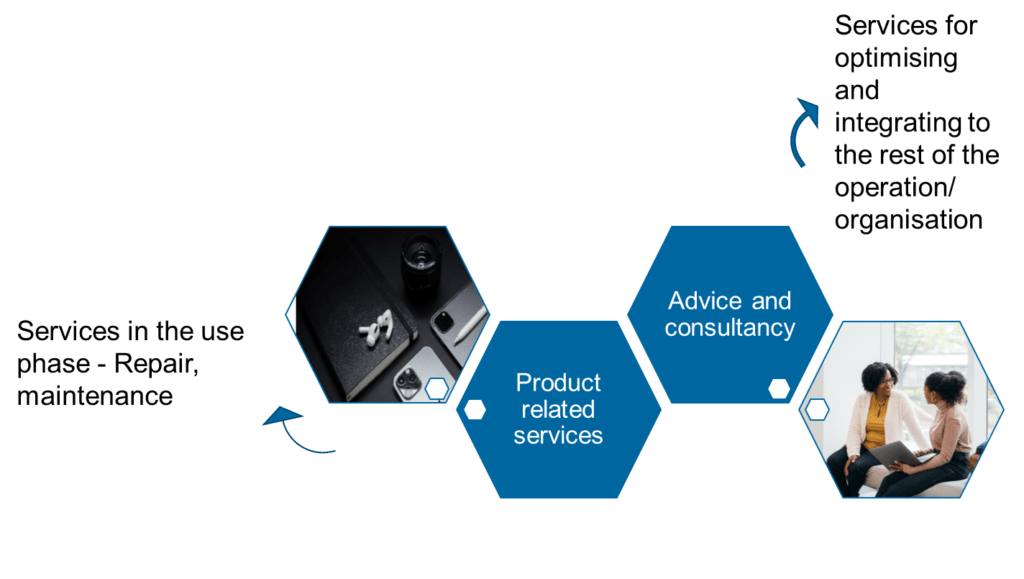
3. Product-oriented PSS – Pay for value added services
Product is owned by buyer and the business model is still mainly geared towards sales of products, but some extra services are added.
Explanation and diagram
Product-oriented PSS – Pay for value added services
Product is owned by buyer and the business model is still mainly geared towards sales of products, but some extra services are added.
Key differences from the linear product model
| Linear Product Model | Product-Service Systems |
| Sell ownership of products. | Sell access to services/performance. |
| Revenue from unit sales | Revenue from ongoing service delivery |
| The customer bears end-of-life costs. | Provider retains responsibility for the product lifecycle. |
| Success = more products sold | Success = longer product utilization |
To end this course, PSS offers a powerful way to put circular economy principles into practice by prioritizing access over ownership, extending product life, and minimizing waste. Throughout this course, you’ve explored the urgency behind transitioning from a linear to a circular model, the core strategies that enable circularity, and how these strategies can be applied in real-world scenarios. The circular economy is not just about managing waste; it’s about redesigning systems to be regenerative, efficient, and inclusive. As we move forward, embracing models like PSS will be crucial in creating sustainable value for both businesses and society.